


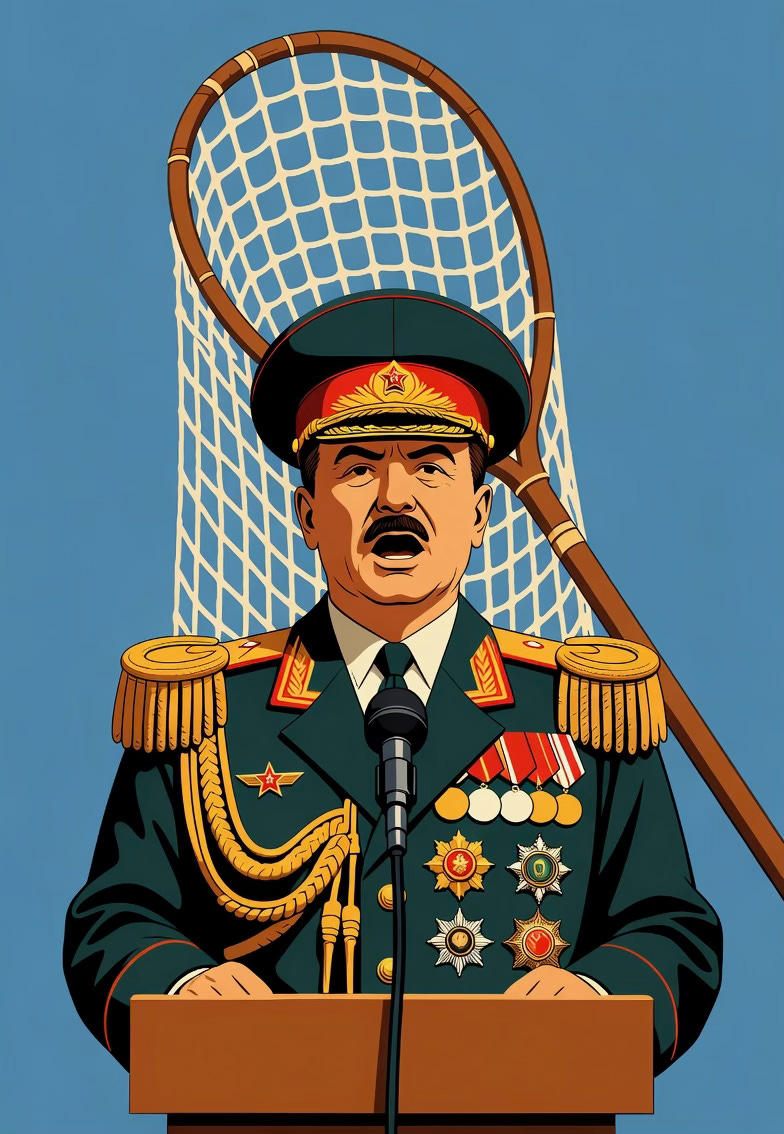
Taking out dictators has its merits
When Maduro was captured, some cheered. But wat it the right thing to do? Since things could get worse in Venezuela, that remains to be seen.
When should you remove a villain?
Generally, the act has moral appeal.
Maduro was no good egg. He caused immense harm to his homeland. On top of that, he was accused of being an illegitimate leader who stayed in power through election fraud.
Preventing harm is a just act. That arguably justifies eliminating those who cause it.
Unfortunately, quelling wicked men is not always for the best.
Destroying a bad thing or person can make things worse. Cut a snakehead off, and others may reveal themselves. And each of them could be more venomous.
Killing the chief villain is futile if his successor is even more wicked.
Hence, intervention risks destabilization.
Regime changes might produce unrest, insecurity, and even civil war. They also set a precedent for others to repeat. While counterintuitive, removing a tyrant may produce a catastrophe.
The current tyrant may be endlessly preferable over the next one.
For a just intervention, it must be ensured that the situation is not worsened.
If you cannot guarantee a positive outcome, it is difficult to justify. Prudent intervention requires an achievable plan. If there is no way to guarantee stability, it remains a moral gamble.
That explains the geopolitical outcry. Trump has removed a dictator - but at what cost?
He should have minimized harm, but he may have tried to wing it.
The slayer of a villain is (partially) responsible for his successor.
After all, he enabled the rise of the new ruler. Cleaning out corruption is a worthwhile pursuit. But if you remove one toxic individual, it is thinkable that more toxicity will bubble up.
One must prevent adding insult to injury.
Perverse people die; perverse incentives do not.
Within corrupt institutions, the latter are embedded. Their inhabitants are tempted by them at all times. Hence, corruption is difficult to uproot.
Take out one tyrant, and the system he left will quickly produce a new one.
It is therefore not easy to replace bad leaders with good leaders. The success of good leaders requires good systems. Building those is endlessly more complex than shooting dictators.
But if it is not managed, there is no point in removing leaders in the first place.
When Bush proclaimed mission accomplished in 2003, he was, in a sense, correct, but he failed to anticipate what followed. The Ba’athist regime had been toppled. The challenge proved in securing a better one.
That is where he failed.
Removing tyrants has practical constraints.
It also has ethical constraints.
The misery of the people he tyrannizes must not be exacerbated in the long term. Whoever liberates the people bears the responsibility for their suffering not intensifying. Should society fall apart, then it must be put back together.
Tyrant removal, thus, is inextricably bound to institutional maintenance and repair.
Maduro's capture is not the ethical problem in itself.
The problem is what the consequences thereof might be. Trump is accountable for the turmoil he creates. Thus, he should ensure Venezuela’s stabilization.
Killing tyrants is simple. Fixing their messes is not.
Shooting villains alone does not make anyone a hero.