


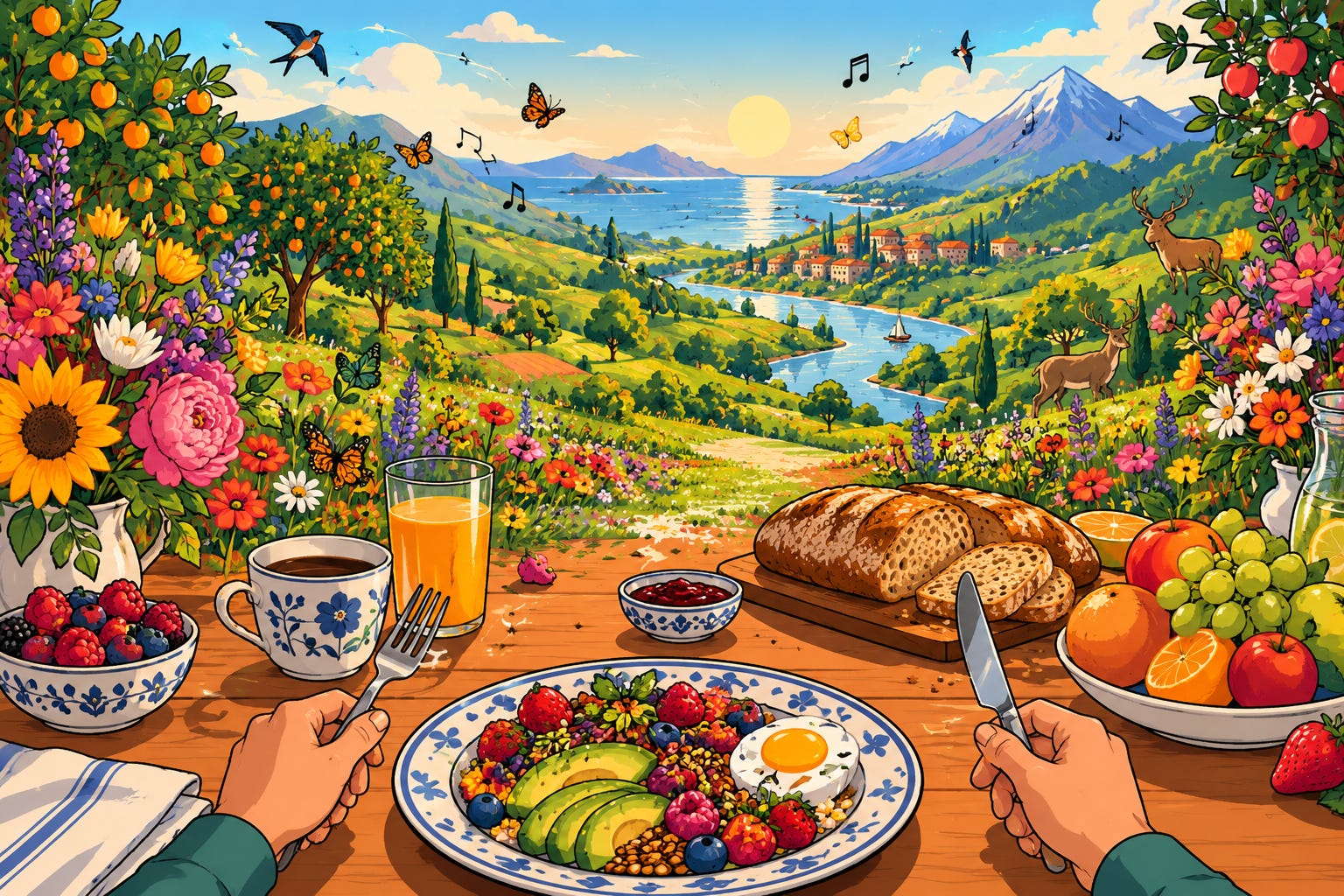
Lust for life is, generally, a good thing.
If you are safe, successful, and morally sound but still not excited to get out of bed, that should spark concern. It is best to appreciate positivity when it comes your way. Praising it, although a simple act, makes life worth living.
It is hard to explain, though, what lust for life exactly is. It is not quite optimism, and not quite happiness.
So let’s examine its constitution.
Lust for life, if anything, is a kind of appetite.
That is true even if it relates only to the moment you get up in the morning. It could be just a concrete hunger for breakfast. In turn, a healthy breakfast may translate into hunger for the day: working hard, honoring relationships, and all adventures to come.
When present, lust for life turns ordinary days into days to be relished.
It is not quite like optimism, since that is more of an expectation. It is also not merely happiness, since that is the product of a positive life, not an attitude. Lust for life is something different.
It involves a prior want to be here at all.
Across the world, cultures have different names for it.
Joie de vivre, Lebensfreude, or simchat chaim are just three examples. Generally, it describes someone healthy; glad to be here. Its absence, therefore, could be a warning.
If you lack it, that means things could be better than they are.
A person may be doing well in life yet fail to love it. This is where appreciation makes all the difference. Seeing the good in things tends to bring joy and, if channeled well, that may make you even hungrier.
It can be a good thing to want the world.
It also can be practiced, to a degree.
Sometimes, life is so tough that it is impossible to lust after. Perhaps you feel relieved when the day has gone by. You must rest, only to fight another one.
On a battlefield, you cannot waste time praising the beauty of the sunset, since you would not survive. But when there is space, acknowledging blessings where you find them is deeply motivating.
Appreciation, in that sense, is an art worth practicing.
It relates to appetite.
It is useful to have a hunger for beauty. It drives you towards what you desire, and perhaps even more. Appreciating things with zeal essentially means you are not ungrateful.
It means you are still noticing the abundance coming your way.
But it is not quite the same as being grateful.
You could be in a bad situation, but aware of just how much worse things could get; that alone can be a source of gratitude. It is also a good thing to practice. However, it is not the same as cultivating positivity through a lust for life.
That requires feeling blessed.
Lust for life is about managing a surplus, not a deficit. The duties of life require you to maintain the garden. Lust for life requires it to thrive.
It concerns itself with those fruits you do not necessarily have a right to, but are still blessed with.
It is not merely about enjoyment, though.
It is also about cultivation. Enjoying good things increases your future hunger for them. As such, it provides you with fuel.
Motivated by what the future could be like, you will invest in it, perpetuating a cycle.
Meeting life with joy, in this sense, brings more joy. If you approach life as such, you will become more eager. From such eagerness follows commitment and, possibly, better results.
If the cycle remains uninterrupted, the appetite sustains itself.
This is different from discontent. That would imply present goods do not suffice. Lust for life implies the present good is sufficient, but that there is still space for things to get even better.
There is no reason to despise the day; just to brighten it.
Imagine you are a gardener.
As you tend to your crops well, you will get more seeds. As you get more seeds, you will have more to plant. This, at least ideally, could go on indefinitely.
Or, if you prefer a fiercer example, the same is true for a lion. As it hunts well, it gets energy from its meal: more than it spends.
The wish for more, in both scenarios, provides a self-sustaining cycle.
You cannot summon a lust for life out of the ether.
You can only cultivate it.
To appreciate life to begin with, the channels must be open. Things may be so bad that you cannot honestly celebrate your life. If things are neutral or better, however, that is where you may begin.
Only then can you begin to grow your garden.
Stability, however, is just as important. Enthusiasm has a wild nature and may therefore derail you. But if you plant carefully and appreciate the harvest, then you know your garden will endure.
It can expand steadily.
Through lust for life, you multiply blessings.
Appreciating good things motivates you to chase them. If you move on sheer will, you are typically still making sure things do not get worse. But if you move on lust for life, you are actively looking to progress: growing, appreciating, then doing it all again.
You must box out the bad for bliss to emerge. And after boxing it out, you must ensure it does not creep back in.
But if you can maintain it, you can prosper indefinitely.
This is the best spot to be in.
A creature that still wants to be here will naturally arrange the conditions for itself to thrive. They will bear worldly burdens because they are still glad to be here. Life taxes them less as the quality of it deepens.
The good life treasures itself.
It is always a positive sign.
If you are able to lust after life with every fibre of your being, that means you are in a good place - by definition.
It means you appreciate the good, and still desire the good you may receive. Whatever prizes come your way are extra, but they still might multiply. As such, you identify what you do not require, and exchange it for even more.
The wise gardener treasures the good, harvests it, then plants for tomorrow.