


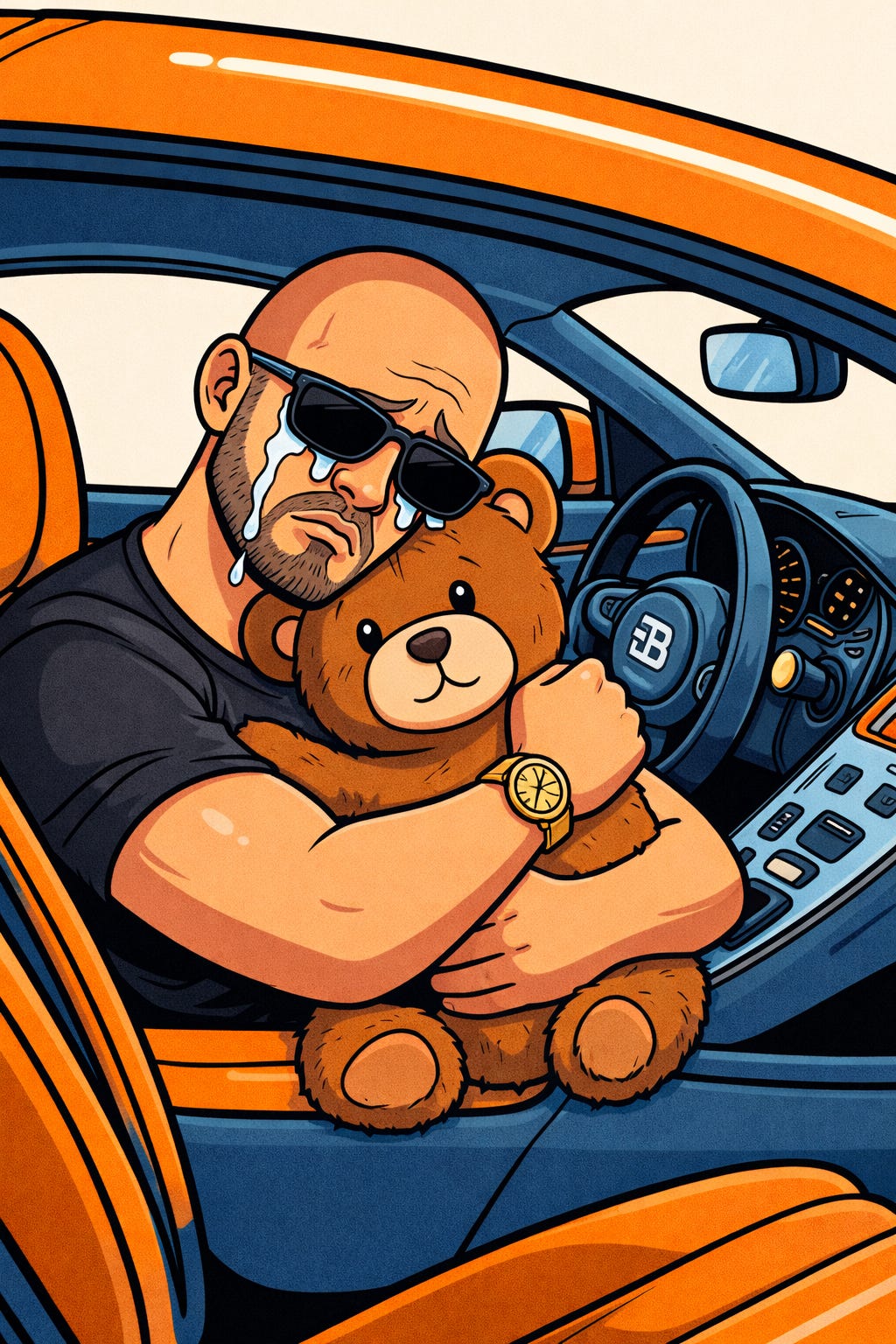
Toxic masculinity is a contested term.
But it should not be contested that there are unhealthy behaviours which are considered masculine. The term is (mistakenly) applied only to men. Some females are deeply masculine and toxic as well.
So it is often used incorrectly. If it were real, toxic masculinity must exist as a basic human form of behaviour.
Let us examine it.
Unhealthy masculine behaviour is control-based.
Under certain circumstances, controlling your emotions is not just important, but necessary. Under other circumstances, it is beneficial to pause and feel emotions instead. If you are completely safe to express yourself, yet still jailing what lives inside of you, that is unhealthy.
Vulnerability has a vital function. It allows for emotions to be processed and resolved.
Both stoicism and emotionality have their time and place.
Sometimes, there is a challenge at hand. There is no time to feel then, only to act. But when the challenge has been resolved, there should be time for recovery.
Because that is where the emotions rush in.
If the internal rule is “I mustn’t ever be vulnerable”, feeling (and therefore recovery) becomes impossible.
Some of us are convinced softness in itself is a vice. But that is a fear-based coping strategy. Posturing strength out of fear ironically demonstrates emotion-based decision-making.
If you adopt an identity of control, negative feelings become a threat to your self-image.
Emotions violate the identities of insecure men (and women).
Sadness, fear, and shame are incompatible with their persona.
It is therefore tempting to repress them. Or channel them into permissible emotions. Anger, for example, does restore a sense of agency and is therefore less problematic.
Emotions that mimic willpower will likely be fine. But those undermining it are inherently threatening.
This restricts the emotional repertoire.
The danger: repressed emotions cannot be integrated.
Anger channels trauma, but it leaves the core wounds as they were. The grief remains. It accumulates.
While denying it to be true, you carry more and more hurt.
It is not primarily about fear of emotions.
At its core, it is about losing control. Emotions are coded as unsafe because they weaken it. If you only trust yourself to maintain control, you cannot allow for overwhelming feelings.
Vulnerability can be inappropriate. But that is true under threat, not under safety.
Therefore, someone who always feels unsafe will never show emotion voluntarily.
The utility of composure under stress is context-dependent.
This is why looking to it as an identity is maladaptive. It locks the person into a state of constant repression. The ability to heal psychological wounds is then lost.
In the long term, mental resilience does not improve; it erodes.
True strength, paradoxically, requires the admission of weakness.
To recover mentally, one must allow vulnerability. Emotional processing precedes emotional resilience. Under safe conditions, that is not only possible, but necessary.
Grief does not diminish strength; it restores it.
Toxic masculinity is real, but not limited to males.
Both men and women demonstrate an inability to allow for (and improve upon) their weaknesses, even under safe circumstances. Constant repression does not remediate the weakness; it widens it. To function well, toggling between control and vulnerability is a must.
It is a balancing act.