


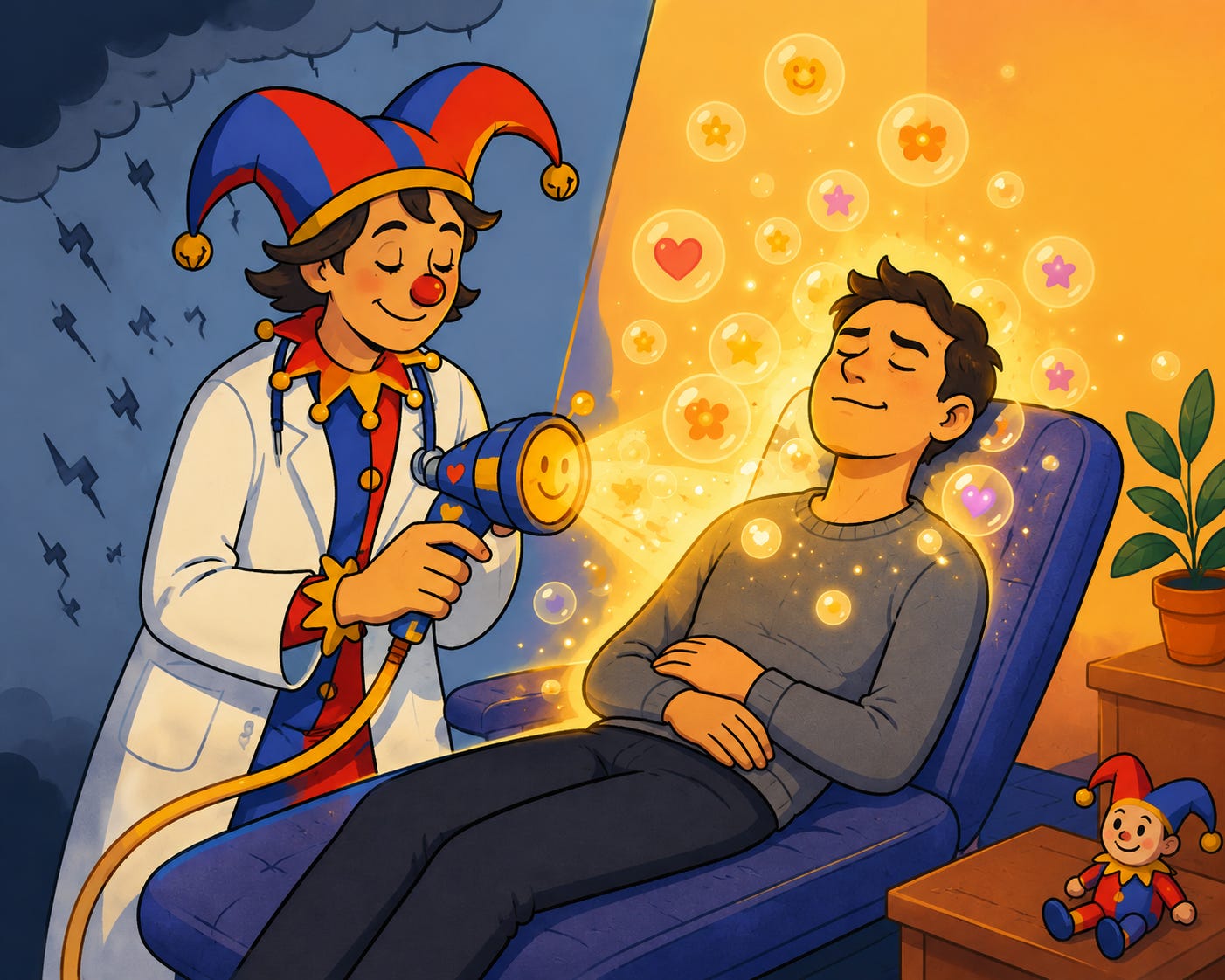
The fool plays an interesting part in society.
Back in the day, there was the jester. Nowadays, we have comedians. But why does this archetype so often recur in human culture?
It is worth exploring
Fool archetypes emerge both in history and mythology.
Trickster gods, clowns, and online memers: these figures all have something to tell us. But it can be difficult to understand precisely what. They enjoy some kind of special position in the community.
Fools have a unique ability to engage with touchy subjects without getting into trouble. They break taboos, but often pay no price for it.
It appears they fulfil a function others cannot.
Their playfulness makes them unique.
Through play, the fool keeps things light, even while dealing with the darkest of subjects. There is no such thing as serious humour. It is free-spirited by definition.
To the fool, play is like a pressure valve. It allows him to expose the flaws in himself, others, and society at large in a way that remains bearable.
In the company of a fool, it is impossible to be overly serious.
This is the gift of the fool: to himself and others.
One of its uses is to restore sanity. Dark comedy is a tool. It illuminates what is repressed, painful, or taboo, and integrates it back into our conscious mind.
Neuroscience confirms laughter has therapeutic value. It lowers stress, eases pain, and strengthens immunity.
The fool is a kind of healer.
But equally, he can be silly just for the sake of being silly.
Monty Python, for example, is not so much about addressing the darkness as about finding the light in absurdity. The goal is simply to entertain. To find delight for no apparent reason.
Hence, the fool thrives in both the light and the dark: when things are good and when they could be better.
One of his biggest strengths is subduing all pretenses in the room.
The fool has abandoned the need to appear flawless, which makes him honest. Moreover, he delivers a joyful admission of his flaws: like ignorance, clumsiness, and inadequacy. Everyone shares these realities, but many of us conceal them.
The fool, quite heroically, goes first in revealing them. He celebrates his shortcomings with bells on.
By reminding us that no one is complete, the fool creates permission to be imperfectly human.
That permission allows the rest of us to breathe.
In the presence of the fool, people relax. Humor achieves that. It is the fool’s favourite tool: light, fast, and completely disarming.
This is why laughter is his emotional signature. It signals the fool was successful.
It is like he creates the elasticity for consciousness to expand.
To learn, you have to admit where you fall short. This is a precondition for growth. Without first acknowledging your limitations, you cannot evolve beyond them.
Through foolishness (or the admission thereof), we transform our ignorance from a source of shame into an opportunity for progress.
Only the fool permits us to be imperfect.
Hence, only he can provide us with the opportunity to be better.
By finding the humour in our limitations, he dissolves the painful reality of them. That creates the space needed to grow beyond our flaws. Thus, true laughter is never frivolous.
It is a key ingredient for human flourishing.