


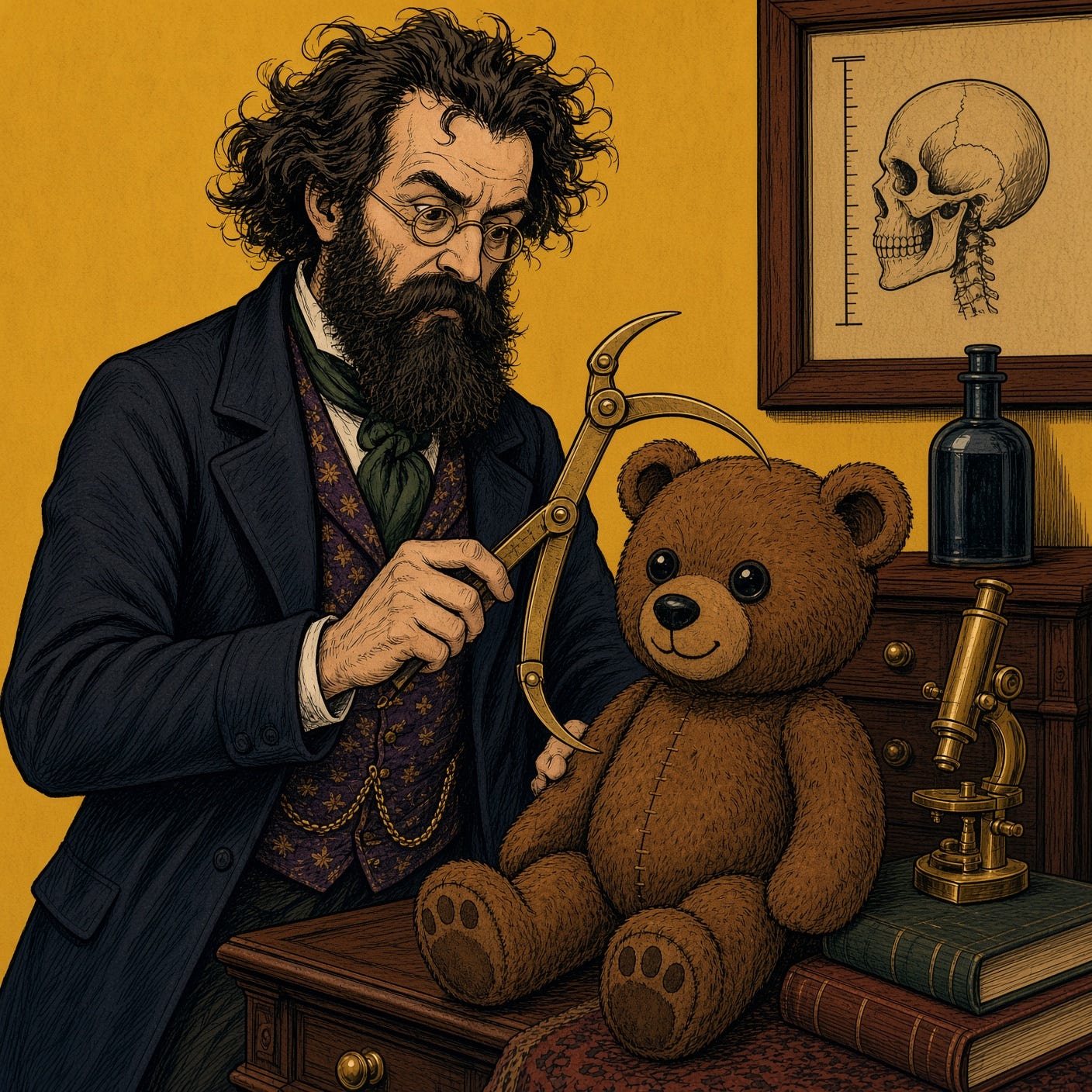
Even in modern times, there are still those who obsess over race.
It is fair to say most Westerners like diversity and would like racism itself to be a thing of the past. But race, as an issue, still influences politics, culture, and feelings of belonging. The most extreme groups throughout history even placed it at the foundation of their thought.
Why do so many individuals inflate its importance up to the point of religiosity?
Race seems like a painfully shallow judging tool.
Immediately, it concerns itself with surface appearance: color. In-depth, it concerns itself with DNA. But even our biological building blocks have their predictive limits.
In reality, we are both nature and nurture, and a great deal of the latter. Still, race remains a way for some to simplify human beings: sorting them into neat categories.
Unfortunately, if meaningless in itself, it becomes more meaningful when we treat it as such.
Racism - in all of its toxicity - is worth investigating.
After all, it is not yet fully gone.
To study it, we should start with the grimmest example ever produced: Nazism. Studying racism in its extreme should tell us something. The Nazis elevated race to such a degree that it defined how they organized society.
Science did not point in the direction of the Nazis, but they wanted to believe it did: so much that they pretended it to be so. Since Germany desired a story to restore its self-worth after humiliation, racism, with all its pretenses, provided it.
It was a malicious coping mechanism.
The Nazis treated their nation as one biological body, and their decline as a disease that befell it. Sickness, if not caused by oneself, is no cause for shame - this was their excuse. The purges that followed were merely framed as an immune response.
Ironically, that frame speaks to their fundamental weakness. The Nazis insisted on being a master race because they never mastered their situation.
If anything, their failure was to blame, and it would be twice to blame during the catastrophe to come.
They inflated the significance of race.
That provided them with temporary consolation.
The Nazis chose national socialism (or: racial solidarity) over liberal citizenship. Here, it turned into a new religion. The so-called purity they worshipped became an excuse for heinous crimes.
To them, cruelty was not a sickness; it was how the natural order expressed itself.
Primal instincts (such as hierarchy, kin-feeling, and scapegoating) undergirded how their society operated. Race was not just an aspect of their identity. It was at its center.
They believed the German race to be superior, and therefore that their racial destiny was to dominate. In reality, it was fueled by narcissistic self-importance: a desire to appear formidable by controlling others.
They wanted race to be fateful: indicative of the “grand future” ahead.
This leads us to why people unhealthily obsess over race.
They want to treat it as destiny. Today’s “race realists” should not casually be compared to Nazis. They are not nearly as absolutist.
Just because you study race does not mean you do so for nefarious purposes. Still, in it lies a similar risk.
The danger resides in turning race into an essence rather than an influence.
Down a long, slippery slope, “genes matter” may become “race should organize society.” First, bad scientists conclude that humans are merely their racial code. After that, bad politicians use it as an excuse to reorganize society.
Such a position, when espoused, is indefensible.
Statistical prediction is poor at determining outcomes for any individual, based on race or anything else. The fact that DNA influences how we function does not mean it should ever determine the rights of its carrier. One does not follow from the other.
The moment race is used as a master principle, it is made out as more than it ought to be. That typically indicates something other than science is being sold.
There is likely a political motivation underneath.
The question remains.
Why do people desire race to be fate?
Partially, it is because it delivers a false promise; one that reality does not. Just a single individual is too complex to be easily judged - let alone a group of individuals. Race provides a visible badge for instant judgement.
It offers an easy story of them and us: how they work, how we work, and why.
This provides the racist with an unearned sense of self.
If you believe your race to be superior, you award yourself an unearned elevation over others. You also draw a full map of who your friends and enemies are. Your actual desire becomes hypothetical destiny.
The benefits are plentiful.
The delusion far-rightists live in provides them with false hope. They believe the superiority within them will inevitably surface and restore the “natural” order. That means: their dominion.
As the Marxists believed revolution was inevitable, the Nazis believed the same for their racial triumph.
They cherry-picked science to confirm their bigotry.
But their vision of race reflected a wish, not reality. The Nazis were in denial of Germany failing by itself and being to blame for it. Hence, they needed to invent an imaginary villain: the Jews - an excuse for why they fell short.
As the state came to dictate everything, it came to dictate the “science” itself. Contradiction became synonymous with betrayal.
This does not mean it will happen again, but it does prove it has happened in the past.
Race remains a charged issue - even among scientists.
But this is rightfully so. If not handled with care, it turns into an excuse to sort humans into narrow boxes. Those who use race as a proxy for destiny still exist, and would use it again for political gain.
A true scientist always admits how little he knows. A political radical typically does the opposite.
False certainty betrays the difference.