


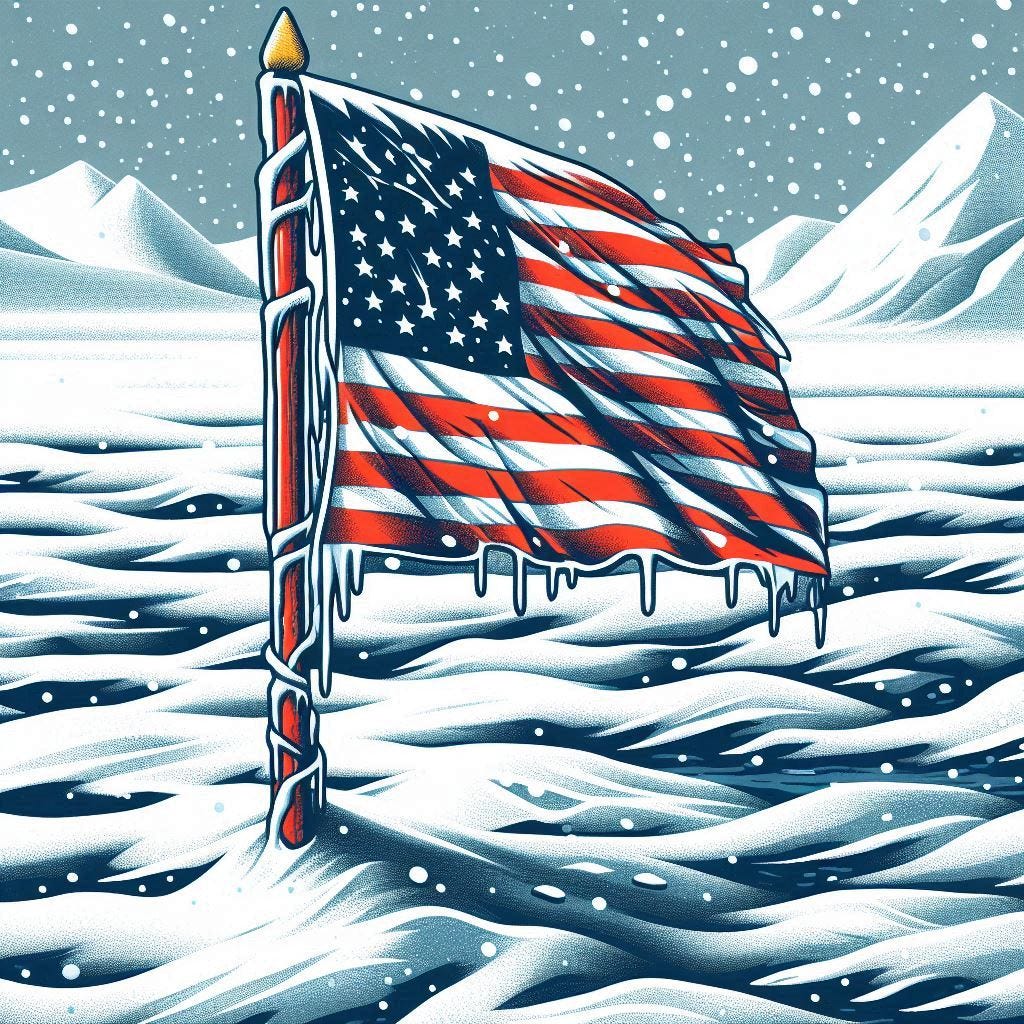
Trump has taken a keen interest in Greenland.
It made headlines. Once upon a time, the proposal was laughed off as absurd. Now, European nations are outraged: a sign that they take him more seriously.
What does this controversy tell us about modern geopolitics?
It dates back to 2019.
Even then, Trump triggered animosity. But the moral indignation of European nations indicates something else. They were livid not just about the proposal, but about the disrespect.
Greenland is an important strategic asset. But that is not at the heart of this story.
It demonstrates something more foundational.
Trump brashly shattered an illusion.
European leaders assumed the world remains governed by liberal norms. That national interests are pursued through cooperation, diplomacy, and international law. Free nations should not disregard each other - they should cooperate.
Ideally, parties negotiate and resolve disagreements. Countries, especially liberal democracies, do not participate in might makes right.
This is a postwar belief.
Trump punctured it.
At least for a moment, he treated the sovereignty of Greenland as negotiable.
He demonstrated that Western powers may still prioritize self-interest over democratic norms. Territorial ambition is still relevant. Putting America first could mean pursuing its interests to the detriment of others.
Previous presidents, such as Obama, were more globalist. They blended national interests with a respect for international norms.
That preserved faith in cooperative leadership between nations.
It has proven to be (partially) a mirage.
Trump moved with little regard for NATO.
In doing so, he violated the relational norms that underpin alliances. On top of that, he exposed a vulnerability. Europeans are militarily dependent on the U.S., and their protection is no longer taken for granted.
Two fragilities were laid bare:
First, the fragility of a norm-based international system. In practice, ideals only get you so far. The rules apply until the most powerful players decide they do not.
Second, the fragility of a poor military capacity. Europe lacks the strength to enforce its norms.
The continent relied on expectation rather than ability.
Thus, the spell broke.
Europe cannot constrain America - or any other superpower - from realizing its territorial ambitions.
Now, the transatlantic rift has widened. The U.S. has proven ready to exercise power independent of NATO. If it does not want to listen, it will not.
In short, Greenland is bigger than Greenland.
The story is not only about Arctic security. It is about Europe’s lack of leverage. A considerable chasm exists between its theoretical idealism and its actual geopolitical influence.
The whole affair serves as a symbolic marker thereof.
The moral high ground is not enough.
When conflict arises, one needs leverage.
It is impossible to rely on diplomacy alone. Against those who treat power as raw and transactional, finger-wagging is of little avail. If Europe wants to be taken seriously on the worldstage, it must be realistic.
Those who speak softly must carry big sticks.