


Politician has become a somewhat dirty word.
Although that is true, history shows there have been more than a few good ones. If we accept that, what separates them from the others? Politics often feels corrupt in itself, but some leaders do manage to treat power as a tool rather than a prize.
How are such figures best identified?
The untrustworthy politician, of course, is a stereotype.
And that is for good reason. The slick huckster with a big smile and even bigger promises is an image modern man is all too familiar with. “Good politician” has come to sound like an oxymoron.
Still, examples do exist.
Politicians are vessels.
They are conduits for whatever they propagate: positive or negative.
For better or worse, ideals, ambitions, and interests are channeled through them. Their morality depends not on whether they succeed, but on what they are vessels for. Good politicians are, simply, a vessel for something good.
They carry the public good with a certain restraint.
A malign politician is the opposite: a contaminated vessel.
He typically presents a pretty picture, but uses his position for personal gain (or maybe even destructive ends). The key distinction lies in his approach. To the ill-intended public servant, power is not a means; it is an end in itself.
The good politician treats power as an instrument. The bad one seeks power for its own sake.
When personal interests conflict with societal ones, the difference in character becomes evident.
If push comes to shove, a moral politician sacrifices personal gain for the public good. The malign one does the reverse. They seem alike, but are opposites.
It is tempting, but unfair to lump them together.
There is something paradoxical about public servants.
A football player who plays a lot of football becomes a better football player. A baker who bakes a lot of pastries becomes a better baker. A politician who spends a lot of time politicking, however, becomes insufferable.
As he schemes, manoeuvres, and manipulates, he trains himself in the art of nastiness. Meanwhile, he neglects to produce anything fruitful for anyone.
This is how politicians distract themselves from their actual job.
When the process of seeking and maintaining power becomes self-referential, an end in itself, its justification is nullified. Even if the end of your politicking is worthwhile, it typically involves dirty work. This is why the term carries negative connotations.
Gandhi, MLK, and Nelson Mandela were all politicians in a sense, yet we refrain from calling them that out of reverence.
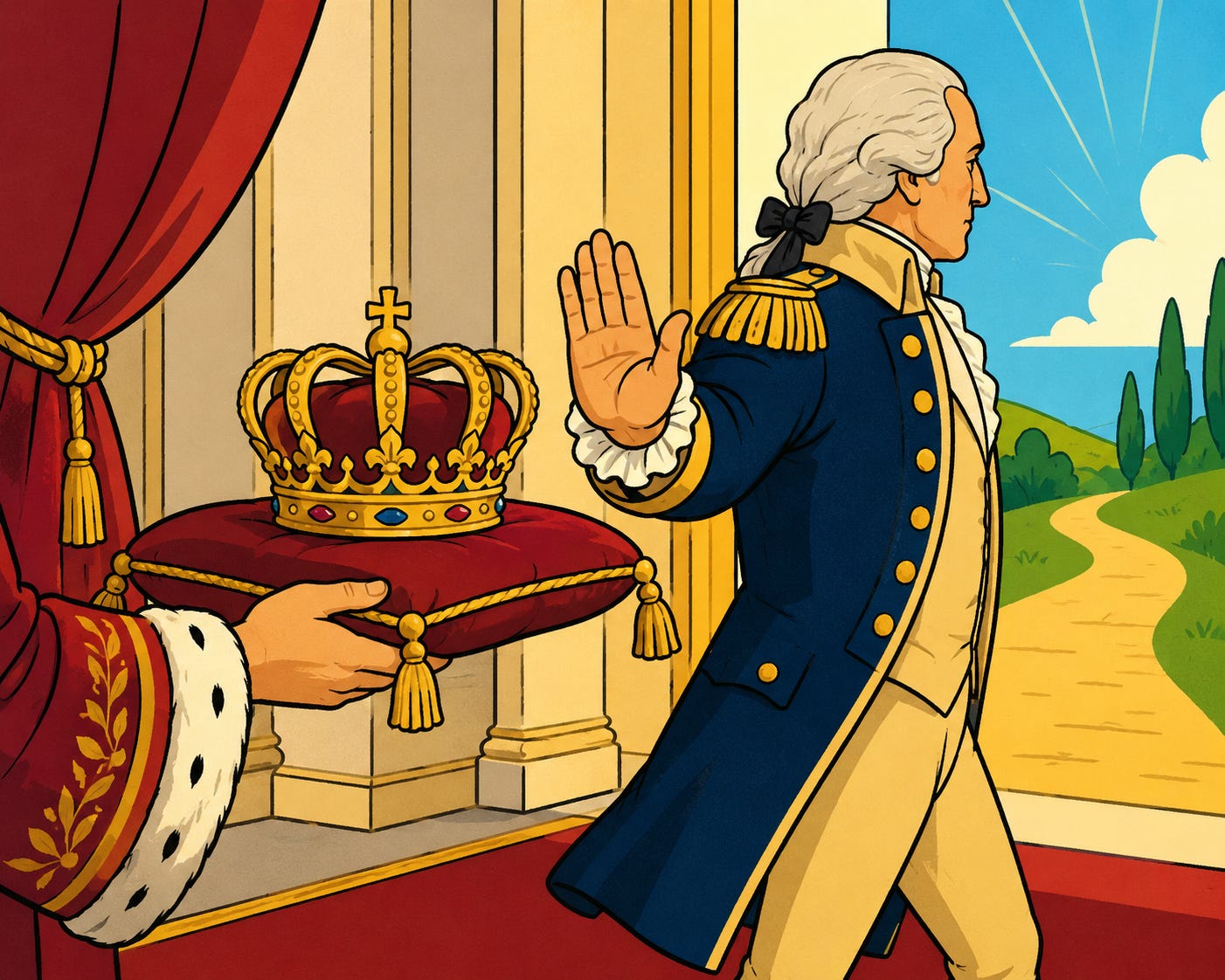
George Washington, similarly, is worth examining. Widely considered to be the greatest American statesman, he treated power as a burden. To him, it was a temporary means, rather than an end.
When push came to shove, he abandoned the highest office. That, if not at the core of his greatness, accounted for a great part of it.
His legacy lay in his character, which allowed him to resist the pull of the will to power.
Good politicians do exist.
Even if we would rather not call them so, it remains true.
They are defined not only by the kindness of their intentions but by their ability to resist the temptation of power. Good politicians keep the power bestowed upon them directed outward: towards real problems. They do not accumulate it for its own sake.
The game of politics incentivizes its players to fall prey to the will to power, but the best among them do not budge.
Genuinely serving the public good, thus, requires fortitude of will. But figures who resisted corruption to the benefit of all have existed. It has been demonstrated that power can be exercised with genuine concern for others.
It is hard, yet not impossible.
The good ones are rare, but real.
Some politicians are, indeed, relatively clean vessels: champions of noble causes. And those who navigate the realm of politics, despite its many pitfalls, deserve public approval. Washington proved such service exists; others did too.
For society to endure, and not to fall prey to corruption, it must keep producing those who quell it.